Login
Home Contact Sitemap login Checkout
Sport Medicine Council of Alberta Logo
Sport Medicine Council of Alberta
  • Home
  • Concussion
    • Concussion
    • Alberta Concussion Alliance
    • Concussion Information
      • Concussion Information
      • Sport Related Concussion
      • Concussion Tools
      • Concussion Research
      • Brain Injury
    • Concussion Resources
    • Concussion Education
      • Concussion Education
      • Brain Waves (Grades 4 - 6)
      • Online Courses
      • Webinars
    • Concussion Policy & Protocol
    • Concussion Statistics & Facts
    • Concussion Awareness Toolkit
  • Courses
    • Courses
    • Sport Trainer (Day 1 & Day 2)
      • Sport Trainer (Day 1 & Day 2)
      • Athletic Injury Management (Day 1 Only)
      • Sport Taping & Strapping (Day 2 Only)
    • Sport & Mental Health (Online)
    • Prerequisites & Disclaimers
    • Course Policies
  • Store
    • Store
    • All Products
    • Kits
      • Kits
      • Kit Purchase
      • Kit Rental
    • Manuals - Workbooks
    • Tape - Wraps
    • Scissors - Cutters
    • Creams - Lubricants - Sprays
    • Tensor Bandages
    • Bandages - Gauze - Skin Closures
    • Cold Therapy
    • Medical Supplies
  • Education Zone
    • Education Zone
    • Teacher Zone
      • Teacher Zone
      • Equivalency Achievement Program
      • Teacher Certificate Request
      • EAP Teacher Supplies
    • Student Zone
      • Student Zone
      • High School
        • High School
        • After High School
      • Post Secondary
        • Post Secondary
        • MacEwan University PEDS 240 Student Options
        • Medicine Hat College KNES 220 Student Options
        • Northwestern Polytechnic PE 2400 Student Options
        • University of Alberta KIN 240 Student Options
  • Resources
    • Resources
    • Sport Integrity
    • Safe Sport
      • Safe Sport
      • Alberta Safe Sport Complaint Mechanism
      • Canadian Safe Sport Program
      • Responsible Coaching Movement
      • Safe Sport Training
    • Clean Sport
    • Fair Sport
    • Find a Sport Medicine Professional
    • SPHEReS
  • Membership
    • Membership
    • General Membership
    • Teacher Membership
    • Student Membership
  • About
    • About
    • History
    • Board of Directors
    • Our Team
    • Documents
    • Territorial Acknowledgement
    • Frequently Asked Questions
    • Donate
      • Donate
      • Alberta Games
      • Area of Greatest Need
      • Alberta Concussion Awareness
      • Canadian Pro Rodeo Sport Medicine Team
    • Contact
Home/Concussion/Concussion Awareness Toolkit Print This Page
Concussion Awareness Toolkit

Concussion Awareness Toolkit

Concussion Awareness Toolkit

Concussions can happen to anyone, anywhere and at any time. Raising awareness can help more people recognize a suspected concussion, respond appropriately and understand the importance of proper care and recovery.

The Concussion Awareness Toolkit provides practical, evidence-informed materials to support concussion awareness efforts across Alberta. Download and share the campaign toolkit, infographic, social media graphics, sample messages and other materials to help spread credible concussion information in your community.

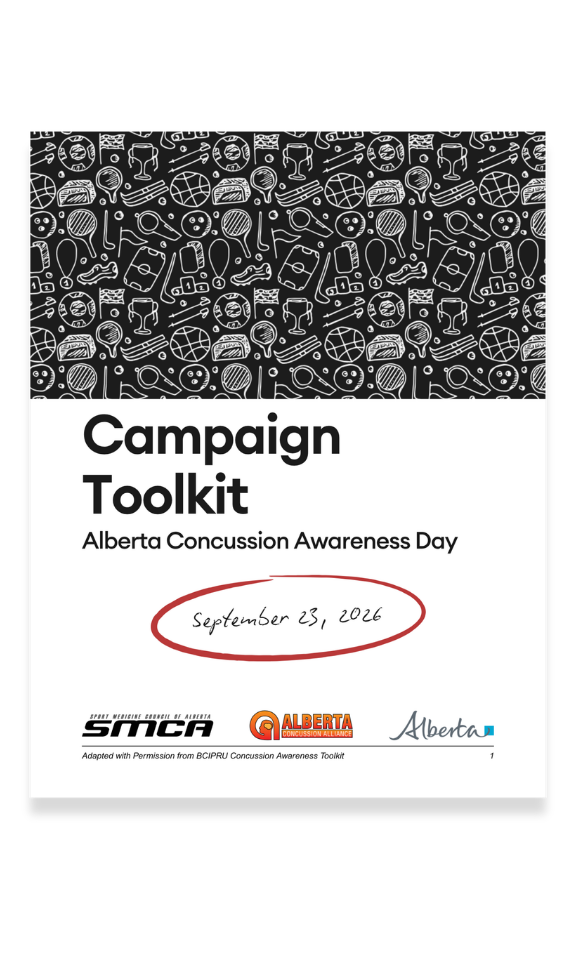
Campaign Toolkit

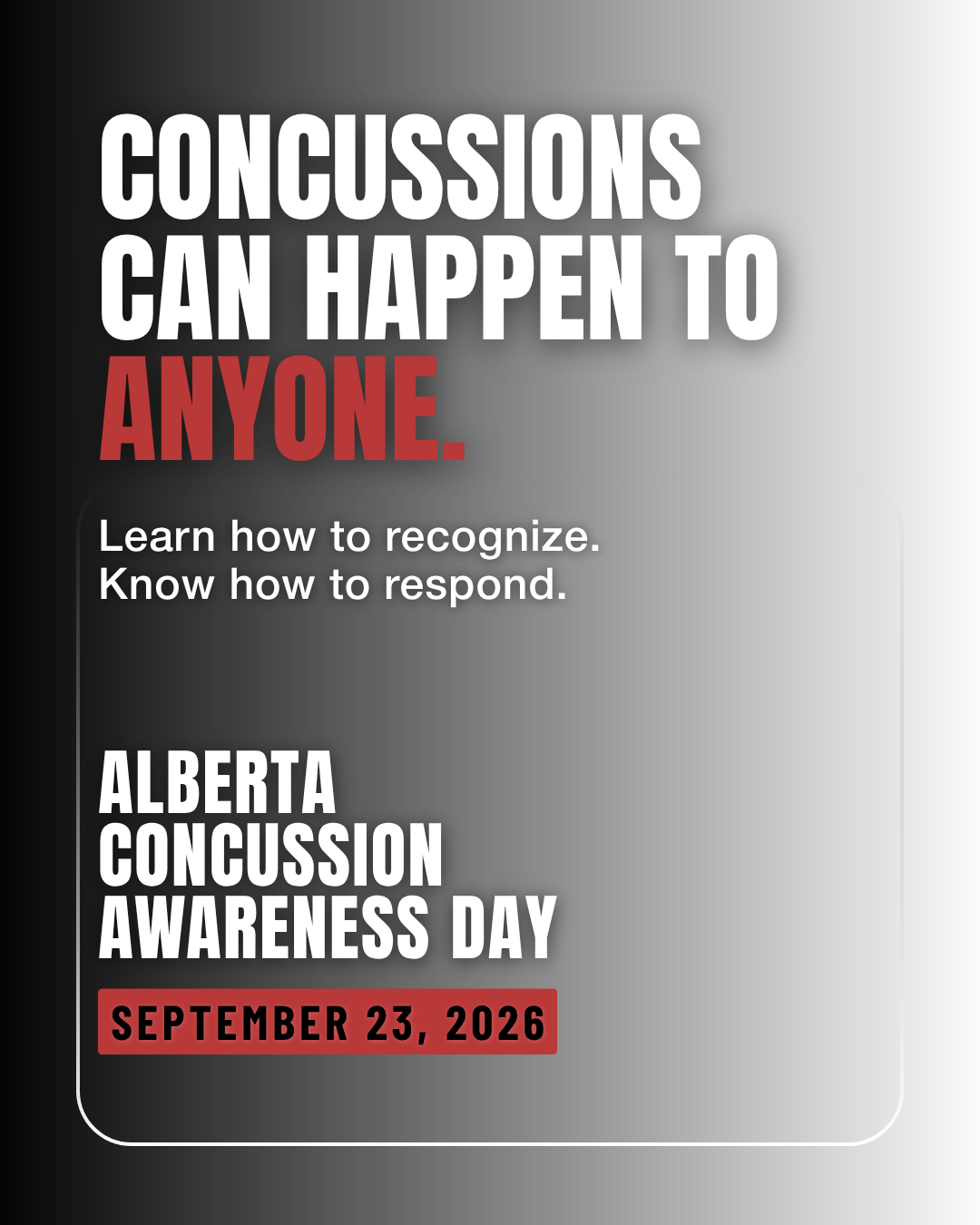
Alberta Concussion Awareness Day will take place on Wednesday, September 23, 2026. This campaign toolkit provides key information, practical tools, and shareable resources to support concussion awareness efforts across the province.

CAMPAIGN TOOLKIT

Campaign Toolkit Front Page

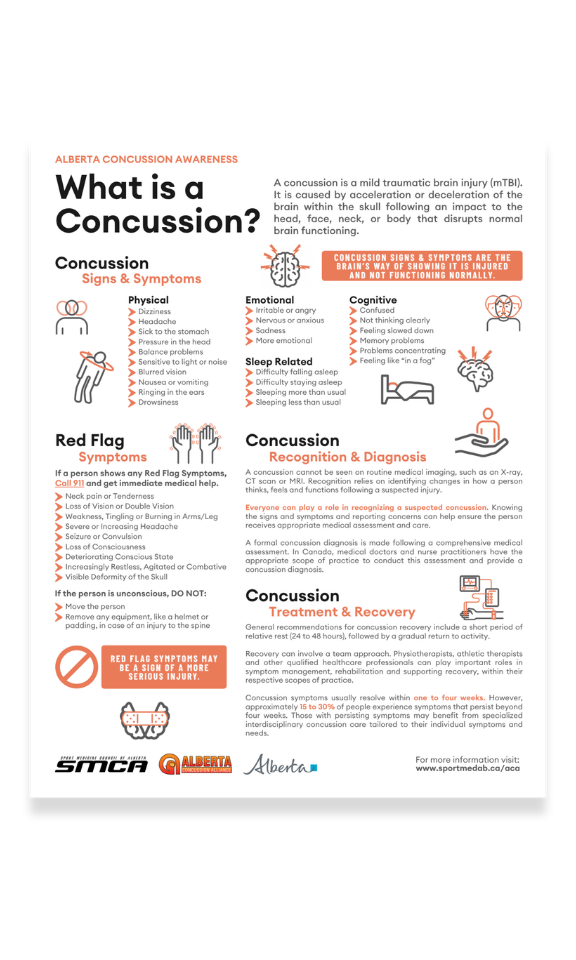
Concussion Infographic

A quick-reference infographic covering concussion signs and symptoms, red flag symptoms, recognition and diagnosis, and treatment and recovery. Download and share this resource to help increase concussion awareness and support an appropriate response to a suspected concussion.

CONCUSSION INFOGRAPHIC

Concussion Infographic

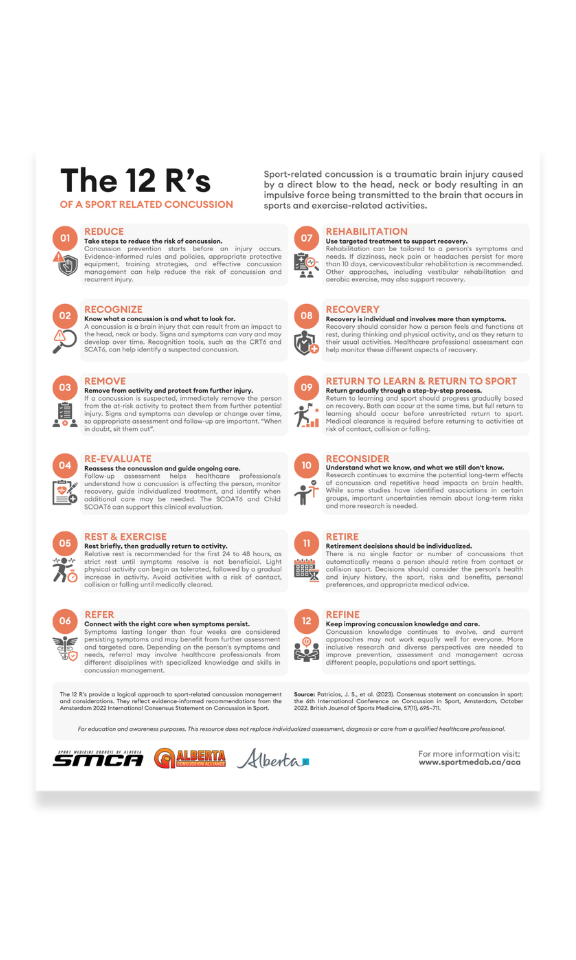
12 R's of SRC Infographic

A quick-reference infographic highlighting the 12 R’s of sport-related concussion, from prevention and recognition through recovery, return to activity and longer-term considerations. Download and share this resource to help increase awareness and understanding of concussion.

12R'S SRC INFOGRAPHIC

Sport Concussion Infographic

Social Media Guide

Support Alberta Concussion Awareness Day on social media by sharing campaign messages and graphics with your community. Use the suggested captions and hashtags below, or adapt them to suit your audience.

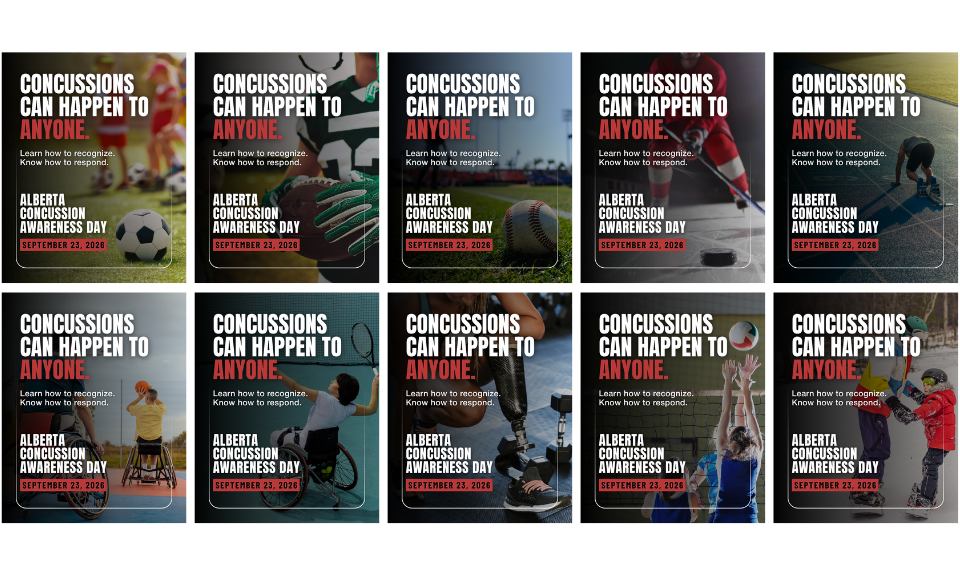
Sample Graphics

The following images have been created for your use on social media.

SAMPLE GRAPHICS (ZIP)

Campaign Toolkit Front Page

Overlay Template

Add your own background photo to our customizable template and show how your organization is helping build concussion awareness across Alberta!

OVERLAY TEMPLATE (PNG)

Campaign Toolkit Front Page
Hashtags

These hashtags are our recommended selection if you're hoping to reach audiences interested and affected by concussions. Please take a look below, and feel free to select from any of the hashtags to help you with your social media posting.

  • #ACADay
  • #ConcussionAB
  • #ABConcussionDay
  • #ConcussionAwarenessDay
  • #AlbertaConcussionAwareness
Captions
  1. The Alberta Concussion Awareness Day is for everyone with a role in healthy active living – sport and recreation participants, parents, coaches, organizers, educators, and more! For more information visit: www.sportmedab.ca/aca
  2. September 23rd is Alberta Concussion Awareness Day! Learn how to recognize and respond, concussions can happen to anyone. For more information visit: www.sportmedab.ca/aca

Share Your Concussion Experience

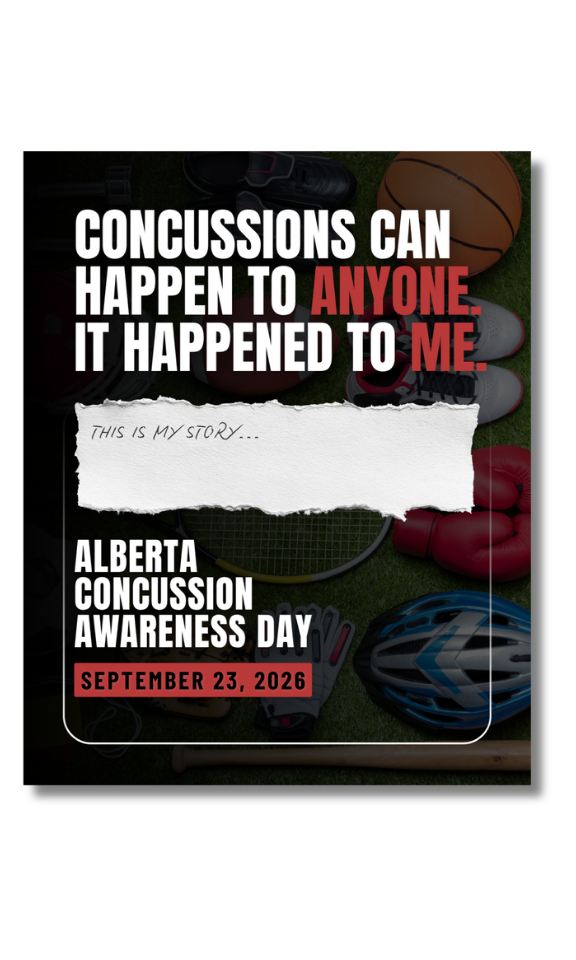
Every concussion story matters. As part of Alberta Concussion Awareness Day, we invite you to share your own experience—or that of someone you’ve supported. Personal stories help raise awareness, reduce stigma, and highlight the very real challenges and successes of concussion recovery. By speaking up, you help others feel seen, understood, and less alone.

CONCUSSION STORY (ZIP)

Concussion Story Photo

Shareable Concussion Messages

Looking for concussion information to share with your community? Use these ready-to-share messages in social media posts, newsletters, websites and other awareness activities.

Myth

You must lose consciousness to have a concussion.


Fact

Most concussions involve disorientation, but not a loss of consciousness. In fact, loss of consciousness only happens around 10% of the time when a concussion occurs (when this happens, medical attention is required).

Myth

Concussions are only caused by a direct impact to the head.


Fact

A hit to the head is not the only way an individual can sustain a concussion. While direct blows to the head can cause concussions, a hit to the body or neck can also cause your brain to reverberate inside your skull.

Myth

A person with a potential concussion can return to sport, play, or normal activity the same day if they are feeling okay.


Fact

If a person has a suspected concussion, they should NOT return to sport or activity the same day. They should be seen by a medical professional and/or monitored for delayed symptoms for 48 hours.

Myth

You should not be exposed to any stimulation that may trigger concussion symptoms until you are completely recovered.


Fact

It used to be common practice to protect individuals with a concussion by placing them in silent, dark rooms until symptoms subsided. However, the “rest and wait” approach is no longer an appropriate recovery plan and can actually worsen symptoms.

Myth

Concussions aren’t a big deal. An individual with a concussion or a suspected concussion doesn’t need to go to the emergency room.


Fact

Anyone showing signs of a suspected concussion should seek assessment from a doctor, nurse practitioner, or healthcare professional with relevant training. If the person shows any of the Red Flag Symptoms, call 911 or seek emergency care immediately.

Myth

If I have a concussion, it will lead to permanent brain damage.


Fact

There are many causes to degenerative brain disease. Scientific studies are learning about the relationship between concussions and brain disease and while there is a relationship, a concussion does not cause brain disease.

Myth

Complete recovery from a concussion only takes 2 to 3 days.


Fact

Concussions typically resolve within 4 weeks; however, up to 30 percent will continue to experience persisting symptoms beyond this period. Persisting symptoms have the potential to cause long-term difficulties. If there is no improvement or symptoms are worsening 2-4 weeks after a concussion, physician referral to an interdisciplinary clinic is recommended, where available.

Myth

Physical activity should not be allowed following a concussion.


Fact

After the rest period following a concussion, light activity is recommended. This could be in the form of walking if the person feels their balance isn't compromised.

Myth

A person needs to stay in bed and rest for at least a week to recover from a concussion.


Fact

The recovery process for concussion begins with relative rest for a maximum of 2 days, followed by a gradual and well-managed return to activity. This is best done in collaboration with key individuals in the person’s life, such as healthcare providers, family members, friends, employers, teachers and school staff, coaches, etc.

Myth

You must keep a person with a concussion awake following their injury.


Fact

Years ago, people feared that falling asleep after a concussion would put someone at risk for falling into a coma. However, research has disproved this. If someone is stable after a concussion, and they’ve been assessed and cleared by a medical professional it’s not worrisome to let them sleep. Rest, including sleep, is essential for brain recovery. Waking someone repeatedly can actually interfere with healing.

Myth

If you don’t have symptoms immediately, you don’t have a concussion.


Fact

Concussion symptoms don’t always appear right away—they can take hours, days, or even a week to show up. While early signs may include confusion or headache, delayed symptoms like sensitivity to light, sleep issues, irritability, and fatigue are also common.

Myth

If you think you have had a concussion, you should have a CT Scan or an MRI.


Fact

CTs and MRIs cannot reliably show or diagnose a concussion. Concussions are often referred to as an "invisible injury" as these types of tests do not show changes to the brain structures. When a person sustains a head injury, their doctor may order a CT or MRI; however, this is done to rule other head injuries such as a skull fracture, not to diagnose a concussion.

Myth

Protective equipment like helmets and mouth guards prevent concussions.


Fact

Helmets do not prevent concussions, they protect against skull fractures and more serious brain injuries. Helmets can reduce the severity of a blow, but they must be properly fitted and maintained to be effective. Mouthguards are important safety equipment, and they protect the teeth from being chipped, broken, or knocked out. Mouth guards do not prevent concussions.

Myth

Treating an adult for concussion is the same as treating a child.


Fact

The still-developing brain of children and adolescents tends to take longer to recover from a concussion, so it’s important to treat them differently than an adults.

Myth

All concussions are the same.


Fact

As many professionals say, “If you’ve seen one concussion, you’ve seen one concussion.” Concussions can affect people in very different ways—impacting memory, mood, balance, vision, sleep, or even heart rate. No two injuries are exactly alike, which is why personalized assessment and care are key to proper recovery.

Did You Know?

A study conducted by the Injury Prevention Centre determined that 41 Albertans sustain a concussion each day. That is approximately 15,000 concussions per year being diagnosed in Alberta’s emergency departments.

Did You Know?

Most concussions in young children don’t happen during sports. In fact, common causes include everyday falls from beds, stairs, and sofas—only 2 out of 10 concussions in young children occur during physical or sports activities!

Did You Know?

A study conducted by the Injury Prevention Centre determined that in Alberta the highest number of concussions was due to falls. Followed by concussions due to sports activities and motor vehicle crashes.

Did You Know?

People of all ages get concussions, but a study conducted by the Injury Prevention Centre determined that Alberta residents between the ages of 10 and 24 had the highest average number of concussion emergency department visits.

Did You Know?

Most concussions do not involve a loss of consciousness or focal neurologic findings, and symptoms may present hours to days after the injury.

Did You Know?

Alberta residents between 10 and 14 years of age have the highest number of fall related concussion emergency department visits.

Did You Know?

Sports Related Concussions account for about 20% of all concussions with young adults having the highest rates of concussions.

Did You Know?

There is an estimated 1 in 5 lifetime risk of concussion, and children and adolescents account for over 50% of this burden.

Did You Know?

A study conducted by the Injury Prevention Centre determined that in Alberta the highest number of concussions was due to falls. Followed by concussions due to sports activities and motor vehicle crashes.

Newsletter/eBlast Templates

Help spread the word about Alberta Concussion Awareness Day through your newsletter, email list or other communications. Use the ready-to-share templates below as written or adapt them to suit your organization and audience.

Alberta Concussion Awareness Day | September 23, 2026

Wednesday, September 23 is Alberta Concussion Awareness Day, a day dedicated to increasing concussion awareness and sharing credible, evidence-informed information with Albertans.

Concussions can happen to anyone, anywhere and at any time. Knowing how to recognize a suspected concussion, respond appropriately and support recovery can make a difference.

This Alberta Concussion Awareness Day, take the opportunity to learn more, share trusted information and help build concussion awareness in your community.

Learn more and access concussion information and resources at sportmedab.ca/aca.

Alberta Concussion Awareness Day | September 23, 2026

Concussions can happen to anyone, anywhere, and at any time.

Wednesday, September 23, 2026 is Alberta Concussion Awareness Day, an opportunity to increase understanding of concussion and encourage Albertans to recognize, respond to and appropriately manage this common injury.

A concussion is a mild traumatic brain injury that can occur following an impact to the head, face, neck or body. While concussions are often associated with sport, they can happen in many different settings and affect people of all ages.

Recognizing a suspected concussion is an important first step. Signs and symptoms can affect how a person thinks, feels and functions, and they may not be the same for everyone. Knowing what to look for, reporting concerns and seeking appropriate medical assessment can help ensure a person receives the care they need.

Recovery is also different for everyone. While concussion symptoms usually resolve within one to four weeks, some people experience symptoms that persist longer. Treatment and recovery may involve different approaches to manage symptoms and a team of healthcare professionals, depending on the individual's needs.

This Alberta Concussion Awareness Day, you can help by learning the signs and symptoms of concussion, sharing credible information and resources, and encouraging conversations about concussion in your community.

Learn more and access concussion information and resources at sportmedab.ca/aca.

The content and resources contained in this site is intended for educational purposes only. It is not meant to be a substitute for appropriate medical advice or care. If you believe that you or someone under your care has sustained a concussion we strongly recommend that you contact a qualified health professional for appropriate diagnosis and treatment. The collaborators have made responsible efforts to include accurate and timely information. However the individuals and organizations listed on this website make no representations or warranties regarding the accuracy of the information contained and specifically disclaim any liability in connection with the content on this site.

Got a question?
Feel free to send us a message.

Contact Us

Footer Logo

Proudly serving Alberta since 1983.

Percy Page Centre, 1st Floor

11759 Groat Road NW

Edmonton, Alberta, T5M 3K6


Education

Courses

Teacher Zone

Student Zone

Services

Online Store

Kit Rental

Resources

About

About Us

Our Board

Our Team

Connect

Contact Us

Membership

Donate

2026 © Sport Medicine Council of Alberta. All Rights Reserved.

Built By Mediashaker. Built on ShoutCMS.

Terms & Conditions | Policies